If spider veins make you self-conscious about wearing shorts or skirts, or show on your face, there are effective treatments that can help.
Dr. Anita Dormer evaluates each patient’s veins and recommends sclerotherapy, laser vein treatment or a combination of both.
Spider veins are more likely with:
Spider veins are very common and affect a large share of adults over 50.
Spider veins are small blue or red collections of dilated vessels near the skin’s surface, often seen on the face, chest and legs.
They form because of increased back-pressure from larger veins that are not working efficiently. Like a knotted water hose, the pressure causes the smaller vessels to stretch and become visible.
Sclerotherapy is a well-established way to eliminate unsightly spider and small varicose veins. Using a very small needle and special lighting to see the vein, a foaming medication is injected directly into it. This causes the vein to collapse and fade over time.
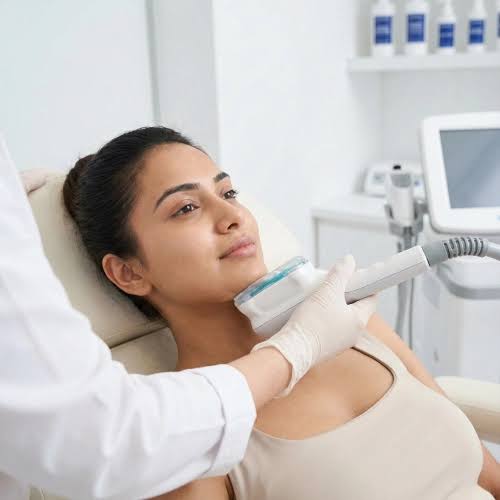
Laser vein treatment uses a specific wavelength to target the red or blue color of the vein and heat it. The vein collapses and is naturally cleared by the body. It is an especially good option for veins on the nose and face, often seen with rosacea and sun damage.
The number of treatments depends on how many veins you have and how extensive they are. Individual veins usually need one to three sessions, and difficult areas may need more.
A foaming medication is injected into the vein, causing it to collapse and fade. Sclerotherapy often produces a large improvement after a single session.
Targeted laser energy heats and closes small veins, making it ideal for delicate facial veins and redness around the nose.
For more extensive veins, sclerotherapy and laser are often combined for the best overall clearance.
Spider vein treatment may help to:
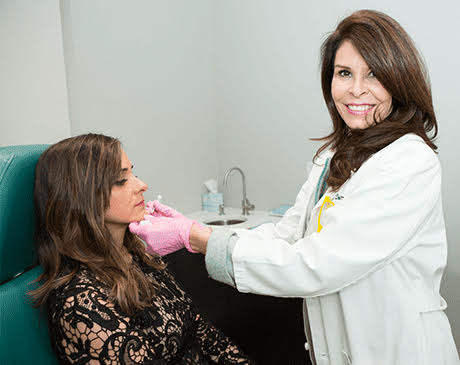
Dr. Anita personally evaluates each patient’s veins and tailors treatment, whether that is sclerotherapy, laser treatment or both. She gives clear guidance on timing and aftercare to help you get the best result.
Facial veins are often linked to rosacea, which can be treated at the same time.
Fall, winter and spring are ideal times to start vein treatment so your legs are ready by summer. Book a consultation with Dr. Anita to plan your treatment.

Individual veins usually need one to three treatments, although difficult areas may need up to six. Sclerotherapy typically gives more improvement per session than laser.
Treated veins do not return, but the underlying tendency continues, so new veins can appear as you age. Occasional maintenance treatments keep results looking their best.
Most patients see good to complete clearing, but around 10 percent have veins that do not fully disappear even after several treatments. Rarely, the condition may look worse after sclerotherapy.
Fall, winter and spring. Bruising and temporary darkening fade better out of the sun, and compression stockings are more comfortable in cooler weather.
Most people return to normal activities right away, avoiding heat, strenuous exercise and NSAIDs for a few days and protecting the area from sun.